
An evening at the lake. A late finish at work. The drive home after cheering on the local team. In Northern Michigan, some of our most familiar trips happen after the sun goes down.
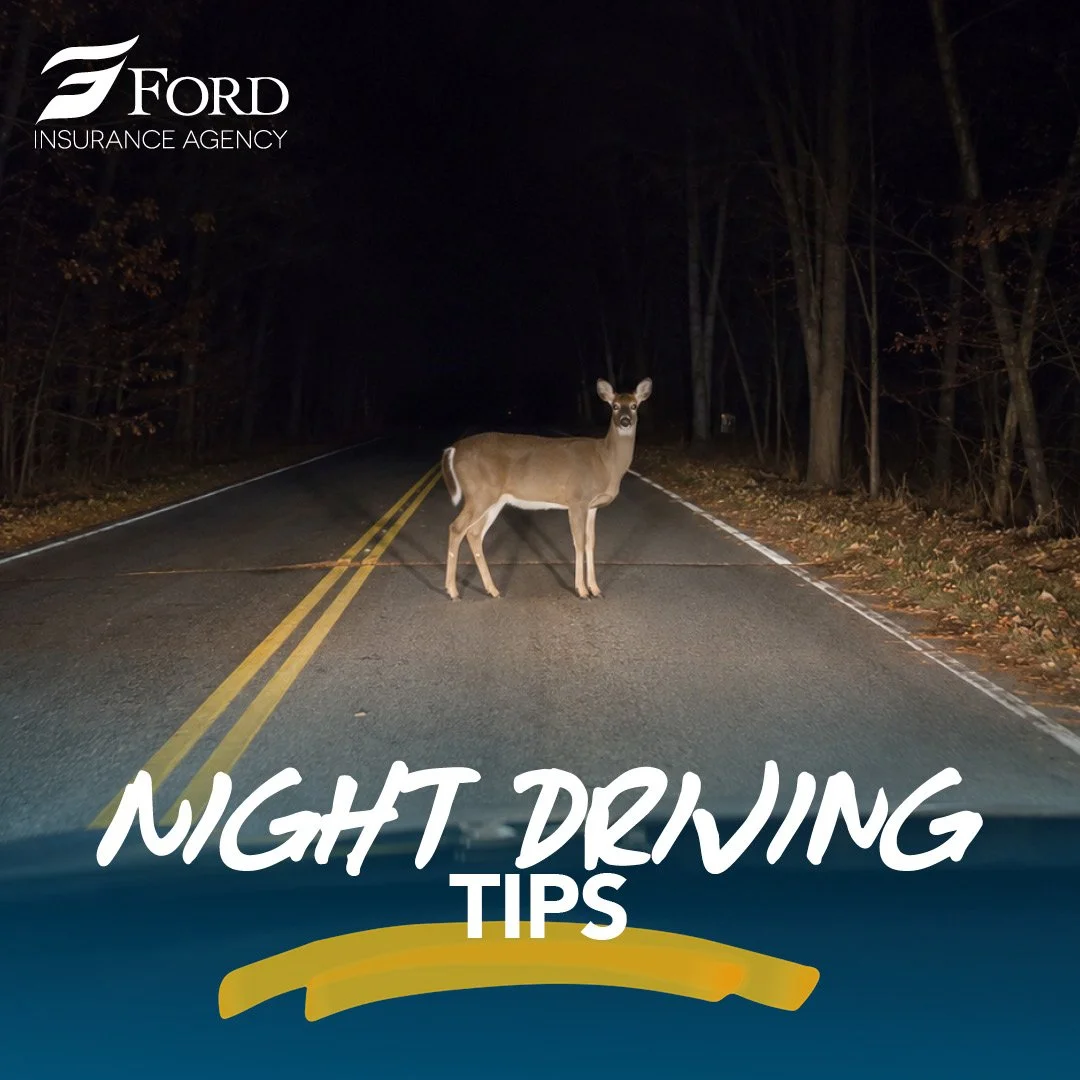
Those familiar roads can feel different at night. Curves are harder to see, headlights create glare, and deer can appear at the edge of the pavement with little warning. Add rain, snow or an unlit stretch of county road, and a little extra preparation goes a long way.
At Ford Insurance, we believe helping you protect what matters starts with everyday habits. Here are a few ways to make your next nighttime drive safer.
Start with a clear view
Before leaving your driveway, check your headlights, taillights and turn signals. Clean your windshield inside and out, wipe off your mirrors, and remove dirt or snow from your lights.
Adjust your dashboard brightness so you can read your gauges comfortably without distracting glare. If headlights behind you are bothersome, use your rearview mirror’s night setting when available.
Keep your headlights on as daylight fades. Use low beams when following or approaching other vehicles, and avoid staring directly into oncoming headlights.
Let the road conditions set your pace
A route you know well still deserves your full attention after dark. Slow down enough to recognize a hazard and stop within the distance your headlights illuminate.
Leave extra space behind the vehicle ahead, and increase that space when roads are wet, snowy or icy. On winding roads near the lake or wooded routes to the cabin, give yourself time to react to an unexpected curve, stopped vehicle or animal.
An extra few minutes on the road is a small trade for a safer trip home.
Keep an eye out for deer
Deer are part of Northern Michigan life, but seeing them beside the road requires a different response than spotting them from your porch.
Stay especially alert around dawn and dusk, and watch for deer throughout the year. Scan both shoulders, paying particular attention to wooded areas, field edges and places near water. Deer crossing signs are useful reminders, but deer can cross elsewhere, too.
If you spot a deer near the road, slow down and prepare to stop. Keep watching after it crosses; others may follow.
If a collision becomes unavoidable, remember: don’t veer for deer. For drivers of cars and trucks, Michigan State Police advises braking firmly, keeping both hands on the wheel and staying in your lane. Swerving can send you into another vehicle, a tree or a rollover. Michigan State Police deer safety guidance
Know when to take a break
A full day of work, an early start at deer camp or a long weekend outdoors can leave you tired before the drive home begins.
If you’re struggling to focus or keep your eyes open, find a safe place to stop and rest. Plan breaks on longer trips, and arrange another ride if you’re too tired or otherwise impaired to drive safely.
Getting home later is better than pushing through when you’re no longer alert.
Be ready for an unexpected stop
Keep a charged phone, flashlight, blanket and basic emergency supplies in your vehicle, especially during colder months.
If you have vehicle trouble, pull into a safe location away from traffic when possible, turn on your hazard lights and call for assistance.
After a deer collision, move out of traffic if you can safely do so, report the crash to police and stay away from the animal. Don’t assume your vehicle is safe to drive. Once you’re safe, contact your insurance provider for help with the next steps. Michigan State Police crash guidance
Make preparation part of the trip
From daily errands to weekends up north, a little preparation can make driving after dark more manageable. Clear windows, working lights, a comfortable pace and an alert driver all help you respond when the unexpected happens.
At Ford Insurance, we’re here to help you prepare for the miles ahead. Contact our team to review your auto insurance coverage and ask questions before your next Northern Michigan adventure.